
A Children’s Shoe Advertisement Changed Snack Food History
Long before Twinkies became an American icon, their name came from a billboard almost everyone forgot.

St. Louis, Missouri—a city known for many iconic things, including the Gateway Arch, which stands 630 feet tall. It’s also home to Budweiser Beer and the famous Clydesdale horses. In fact, brewing has been a major part of the city’s identity for more than 150 years.
But what you might not know is that back in the 1920s, St. Louis was also the footwear capital of the United States. Giant regional companies like the International Shoe Company and Brown Shoe Company operated massive factories along the Mississippi River, producing millions of pairs of shoes for mail-order catalogs and retail stores across the country.
And if you happened to be driving along Route 66 as it passed through the city, you would have seen countless roadside billboards competing for your attention.
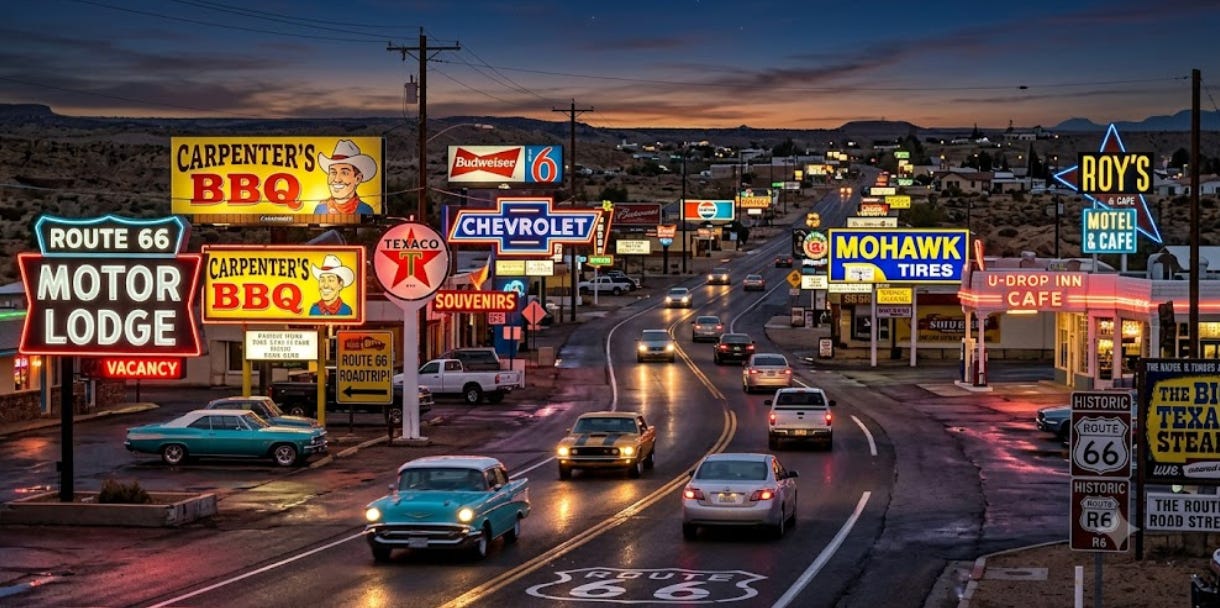
Most people never gave them a second thought. But one of those signs would eventually help name one of the most recognizable snack cakes in American history.
Around those billboards, however, the larger world was growing heavier.
The Great Depression was tightening its grip. Factories cut hours. Families stretched every nickel. At the Continental Baking Company’s Hostess plant near Chicago, specialized shortcake pans sat idle for most of the year.
They were used only during strawberry season to bake Little Shortcake Fingers—small sponge cakes filled with strawberry cream. The rest of the year, the equipment collected dust while the economy darkened.
The pressure was the same everywhere: find something that could sell steadily. Something inexpensive. Something that could turn unused capacity into income.
Something that would keep the ovens warm, employees working, and the nickels rolling in—day after day, long after strawberry season had ended.
What Only A Delivery Boy Sees
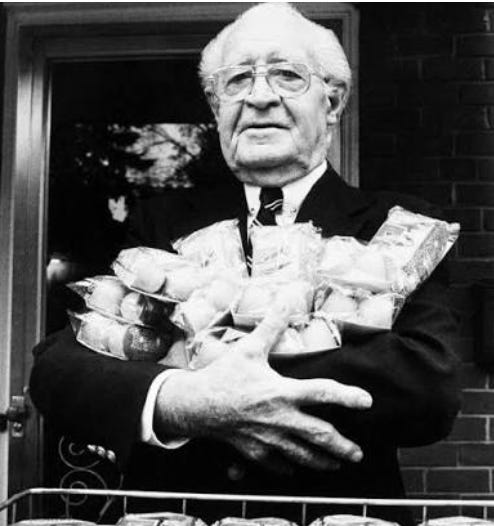
James Alexander “Jimmy” Dewar was born on February 5, 1897, in Pugwash, Nova Scotia, Canada. As a young man he worked demanding manual labor jobs on boats shipping timber and limestone before moving to the Chicago area.
In 1920 he began at the Continental Baking Company as a delivery boy, peddling pound cakes from a horse-drawn cart. He was practical, steady, and observant. Thanks to his strong work ethic and operational eye, by 1930 he had risen to plant manager.
Jimmy watched the idle shortcake pans and felt the weight of unused machinery in a shrinking economy. So he adapted the machinery to pump banana cream filling into cheap, two-pack sponge finger cakes.
Then he created several test batches, which he shared with employees and mid-level supervisors. The reaction was always the same … they loved this newly concocted tasty treat.
Now right around the time Jimmy was finalizing his finger cakes and preparing to pitch the item corporate-wide, he was sent on a business trip to St. Louis.
Just as thousands of other drivers had done, Jimmy drove past one of the many roadside billboards outside St. Louis.
It advertised Twinkle Toe Shoes.
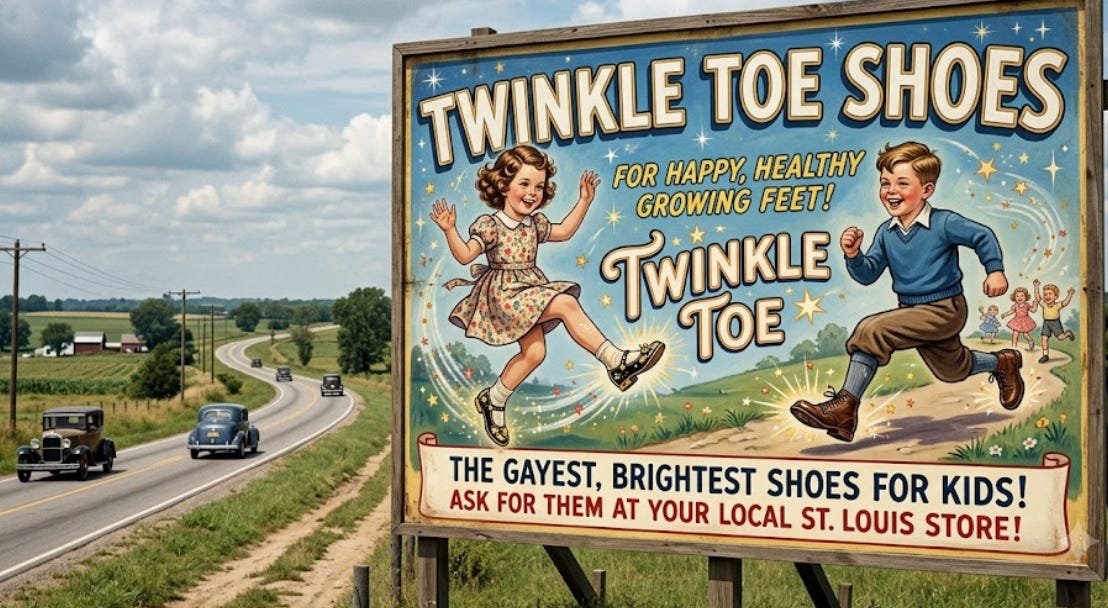
There was something about the playful name that lingered in his mind. Days later, as he searched for a name for his new snack cake, he remembered it.
A Baker’s Delight
Jimmy Dewar’s solution to the shortcake pans busy year round was simple and resourceful. Keep the same golden sponge-cake pans and elongated shape but fill the cakes with a cream that could be made any time of year instead of seasonal strawberries.
And since the cakes were small, they could easily be priced as a two-pack for a nickel—suited to Depression budgets.
At this point in the processing, the only left to do was name this new cake. And that’s when he thought back to the billboard advertising Twinkle Toe shoes.
Borrowing from that, Jimmy shortened the name, making it stand out too little kids. So he named his new confectionary delight Twinkies. Now that he had a name, Jimmy took his concept to the corporate board and received their approval.
The product went straight into mass production and hit store shelves fully branded as Hostess Twinkies on April 6, 1930.
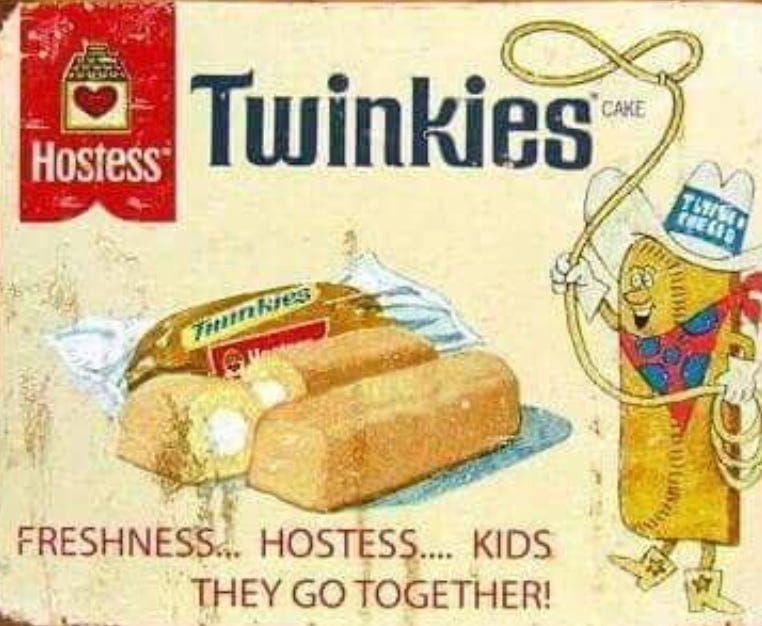
Were the new cakes successful?
You bet they were.
The initial run sold out through local grocers and street vendors rapidly enough that Continental Baking immediately expanded production from a single plant to regional bakeries across the Midwest within its first few months.
While specific unit counts from day one is lost to history, early plant records indicate production quickly scaled into tens of thousands of cakes per week during the summer of 1930 to keep pace with route deliveries.
Even though the original recipe used real eggs, milk, and butter, the cakes stayed fresh only about two days. Salesmen had to restock constantly. But nonetheless, Twinkies was a hit. The nickel price and the cheerful name helped boost sales.
During World War II a banana shortage forced the switch to vanilla cream filling—the version that became permanent and iconic. The little cakes grew familiar on store shelves and in lunchboxes.
What began as a way to fill empty pans and a name inspired by a roadside shoe advertisement became a recognizable American snack.
As for Jimmy, he rose through the company, eventually becoming a regional vice president, and was later known with pride as “Mr. Twinkie.” He would later say the invention was “the best darn tootin’ idea I ever had.”
Not Quilty by Twinkie
Twinkies moved far beyond the bakery.
They entered popular culture—comics, television, and movies. But perhaps their greatest moment was the so-called “Twinkie defense.”
Let me take you back to November 27, 1978, when Dan White, a San Francisco City Supervisor assassinated Mayor George Moscone and Supervisor Harvey Milk at City Hall.
Dan White’s trial took place roughly one year later in 1979. White’s defense attorneys argued a legal concept known as diminished capacity. They claimed White suffered from severe, untreated clinical depression, which rendered him incapable of the premeditation and deliberation required for a first-degree murder conviction.
To establish that White was in a state of severe mental breakdown, defense psychologists presented evidence of drastic changes in his normal behavior:
White was normally a health-conscious, clean-cut former police officer, firefighter, and athlete.
As his depression deepened in the weeks leading up to the murders, he quit his job, abandoned his usual exercise routine, withdrew from his family, and began consuming massive amounts of high-sugar junk food and soft drinks (including Hostess Twinkies and Coca-Cola).
Psychiatrist Dr. Martin Blinder testified that this sudden shift to a high-sugar diet was a symptom of his underlying depression, not the cause of it. However, he also noted that consuming large amounts of sugar might have worsened his chemical imbalance and aggravated his mood swings.
Following the trial testimony, Paul Krassner (the founder of the underground satirical publication The Realist) and San Francisco Chronicle coined the phrase “Twinkie Defense” in his satirical coverage of the proceedings. The media quickly latched onto the phrase, transforming Mr. White’s depression into a sensationalized headline: Man blames Twinkies for double murder.
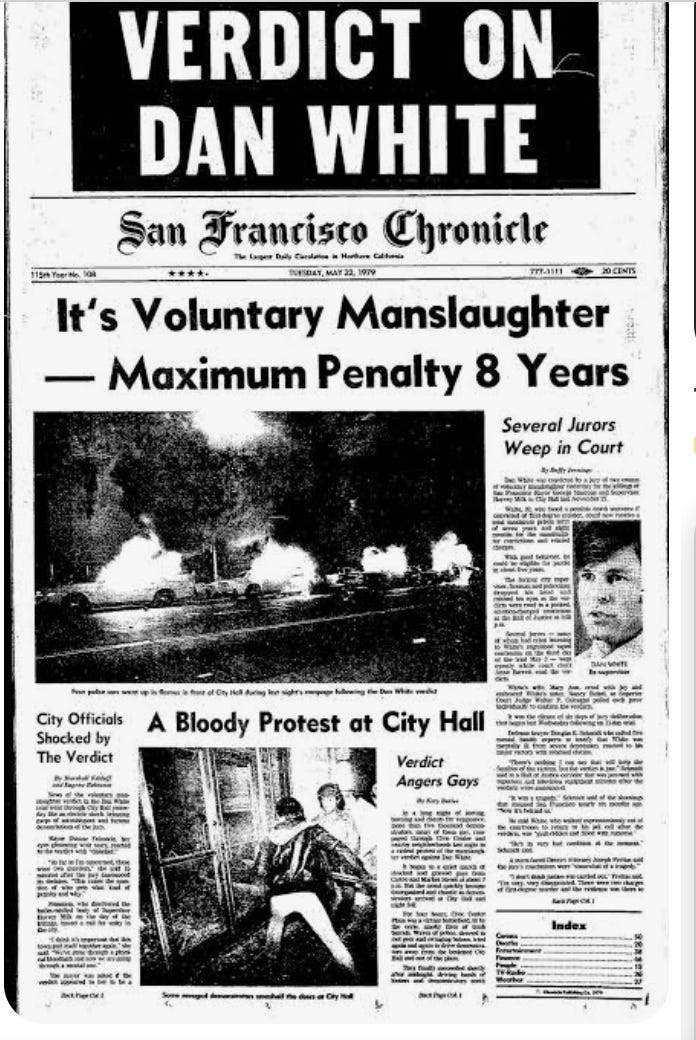
The defense strategy worked. The jury acquitted White of first-degree murder and instead convicted him of voluntary manslaughter, finding that his diminished capacity prevented premeditation.
Dan White was sentenced to seven years and eight months in prison (he served five years before being paroled). Of course that set off a huge public debate on whether the sentence was too short and if the “Twinkie Defense” was legitimate.
The brand survived the outrage and continued selling in big numbers.
In fact hundreds of millions are still sold each year. A practical solution to idle equipment, sparked in part by the cheerful name of a children’s shoe brand on a billboard near St. Louis, became an enduring symbol of inexpensive American sweetness and nostalgia.
When Ideas Collide
Sometimes the most lasting ideas begin with two ordinary things noticed at the same moment: unused machinery in a bakery and a bright billboard promising light, dancing feet.
Opportunity can hide in seasonal gaps and in the playful words companies use to sell shoes to children. Jimmy Dewar simply paid attention—and turned both into something that has outlasted the Depression that gave it birth.
This next section is for paid readers only.
In the Builder Breakdown, I explore why breakthrough ideas rarely stay inside a single industry, the surprising advantage of paying attention beyond your own field, and what Jimmy Dewar’s story teaches us about finding ideas where everyone else sees unrelated noise.
Because some of the best ideas you’ll ever have won’t come from your own work. They’ll come from someone else’s.
What This Story Is Really About
Most people believe innovation begins with expertise.
The more you know about your field, the more original your ideas become.
Jimmy Dewar’s story suggests something different.
He certainly understood baking. He recognized idle equipment. He knew production costs. He understood how to solve an operational problem.
But none of those things gave him the name that made the product memorable.
That came from somewhere else entirely.A roadside billboard advertising children’s shoes.
Notice what happened.
Jimmy wasn’t searching for a brand name.
He wasn’t brainstorming. He wasn’t sitting in a conference room filling legal pads with possibilities. He was simply moving through the world with his eyes open.
The final idea wasn’t created inside the bakery.
It was assembled from two completely unrelated experiences that happened to collide inside one curious mind.
One solved the practical problem. The other solved the emotional one.
Together they created something that neither industry could have produced alone.
The Hidden Dynamic
We often imagine creativity as digging deeper into what we already know.
History suggests the opposite. Many of the most enduring ideas emerge at the edges where different worlds overlap.
A medical invention borrows from nature.
A toy borrows from aerospace.
A business borrows from theater.
A writer borrows from biology.
The farther apart those worlds appear, the more surprising the result often becomes. That’s because our brains are constantly collecting fragments without realizing it.
Most of those fragments disappear.
Some quietly wait. Then one day a problem appears...
...and suddenly an old conversation...
...a childhood memory...
...a photograph...
...or a billboard...
fits perfectly.
Jimmy Dewar didn’t invent the word. He recognized it.
Recognition is often far more valuable than invention. Creators spend enormous energy trying to manufacture originality. Sometimes originality is simply recognizing that two existing things belong together.
What Creators Can Learn From This Story
One of the fastest ways to make your work more original is surprisingly simple.
Stop studying only your own industry.
Read outside your field. Visit museums. Watch documentaries you normally wouldn’t watch. Listen to conversations that have nothing to do with your business.
Pay attention to architecture.
Packaging. Street signs. Children’s books. Old advertisements. History. Science.
Because your next breakthrough may already exist. Just not in the place you’re looking.
Jimmy Dewar wasn’t searching for the perfect name.
He was paying attention to the world while solving an entirely different problem.
That may be one of the most valuable creative habits any builder can develop.
The best ideas rarely arrive alone.
More often, they arrive when two unrelated ideas finally recognize each other.
My cousin lives in Pugwash!